With FriendFeedback we set ourselves the mission of reducing student job anxiety. FriendFeedback is a service that helps students feel safer and more confident when applying for their first working student position. It reduces insecurity in the application process by turning support from friends into a structured [and joyful :)] feedback experience. To Come up with an solution we used User Interviews, Insight Generation, Rapid Prototyping, and Testing.
What is the problem with working student jobs?
Many students enter the job market for working students with little experience, low confidence, and no clear way to know whether their applications are “good enough.” Existing support is mostly generic and without substance.
Our challenge: design a service that makes the first application feel less intimidating & helps students recognize their strengths. (without adding more pressure or bureaucracy)
Stakeholders & Semi‑structured Interviews: Undestanding our Target Group
We started with a stakeholder map to understand the ecosystem around student jobs( students, friends, companies, career centers, etc.). This revealed hidden relationships and points with potential, for example how much informal support already happens in friendship groups.
To dive deeper, we conducted three semi‑structured user interviews with students, having different experiences and life situations. Our interview guide combined prepared questions with space for spontaneous conversation, so we could uncover personal pain points in the search and application process.
Key interview insights:
First‑time applicants often struggle to name and articulate their own skills.
Their application process is highly individual, depending on past experience, financial possibilities as well as your network.
Friends are a key source of feedback – but the quality and structure of that feedback vary a lot.
Cultural Probes & Insight Generation: Even more Research :)
Cultural Probes are small tasks and artifacts that students completed in their everyday life. Instead of directly asking “How confident are you?”, we invited them to reflect and document. They should map their application journey and annotate feelings during key moments. The Cultural Probes revealed subconscious routines and emotions that wouldn’t have emerged in an interview alone. For example, how students postpone (or procrastinate) applications because they “don’t feel ready yet,” even when they already have relevant experience.
From interviews and probes, we moved into Insight Generation: clustering statements, behaviors, and emotions and grouping them into themes.
Our core insight:
Students who apply for a working student job for the first time often cannot clearly recognize their own skills and therefore feel insecure about starting the application process at all. This insight became the anchor for the rest of the project.
Ideation Workshop: As many Ideas ans possible!
We then ran an ideation workshop based on the Double Diamond process. Our goal: generate as many solution directions as possible that answered our HMW question and could be turned into testable concepts.
By the end of the workshop we had several concept directions. Two ideas stood out, including what would later become FriendFeedback. Because it integrated friends as trusted supporters while giving the application process more structure instead of more pressure.
Prototyping: the FriendFeedback concept
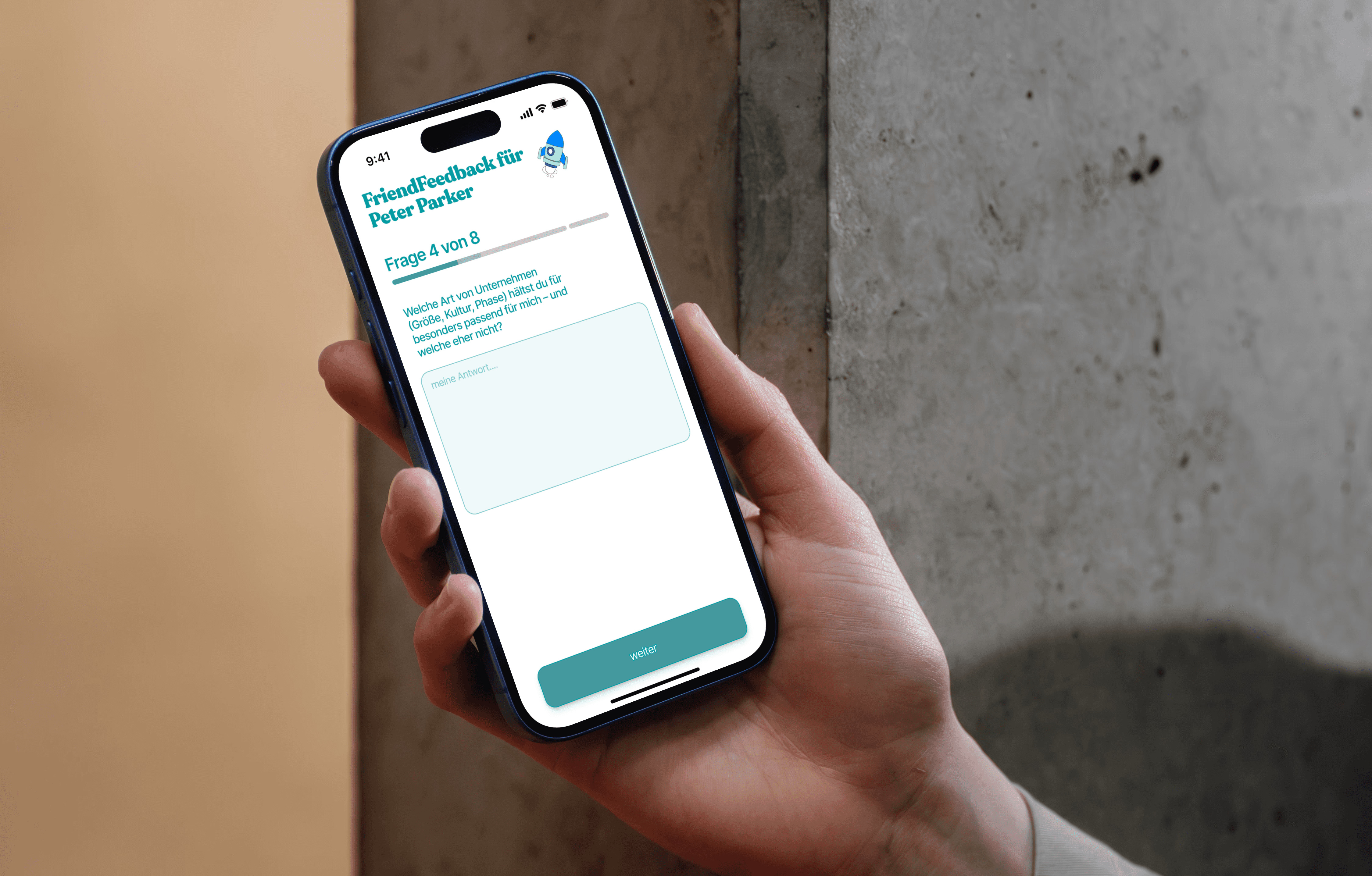
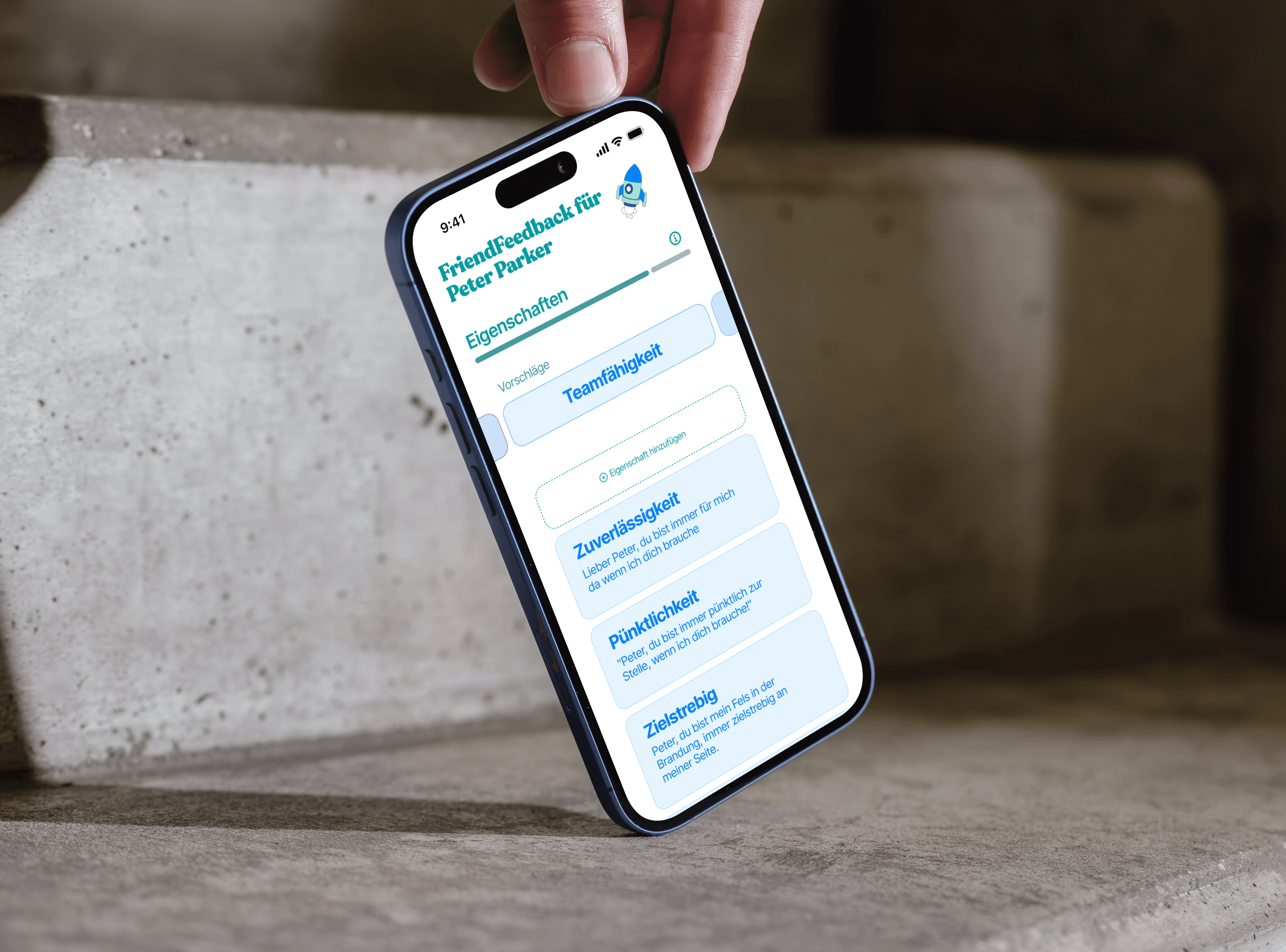
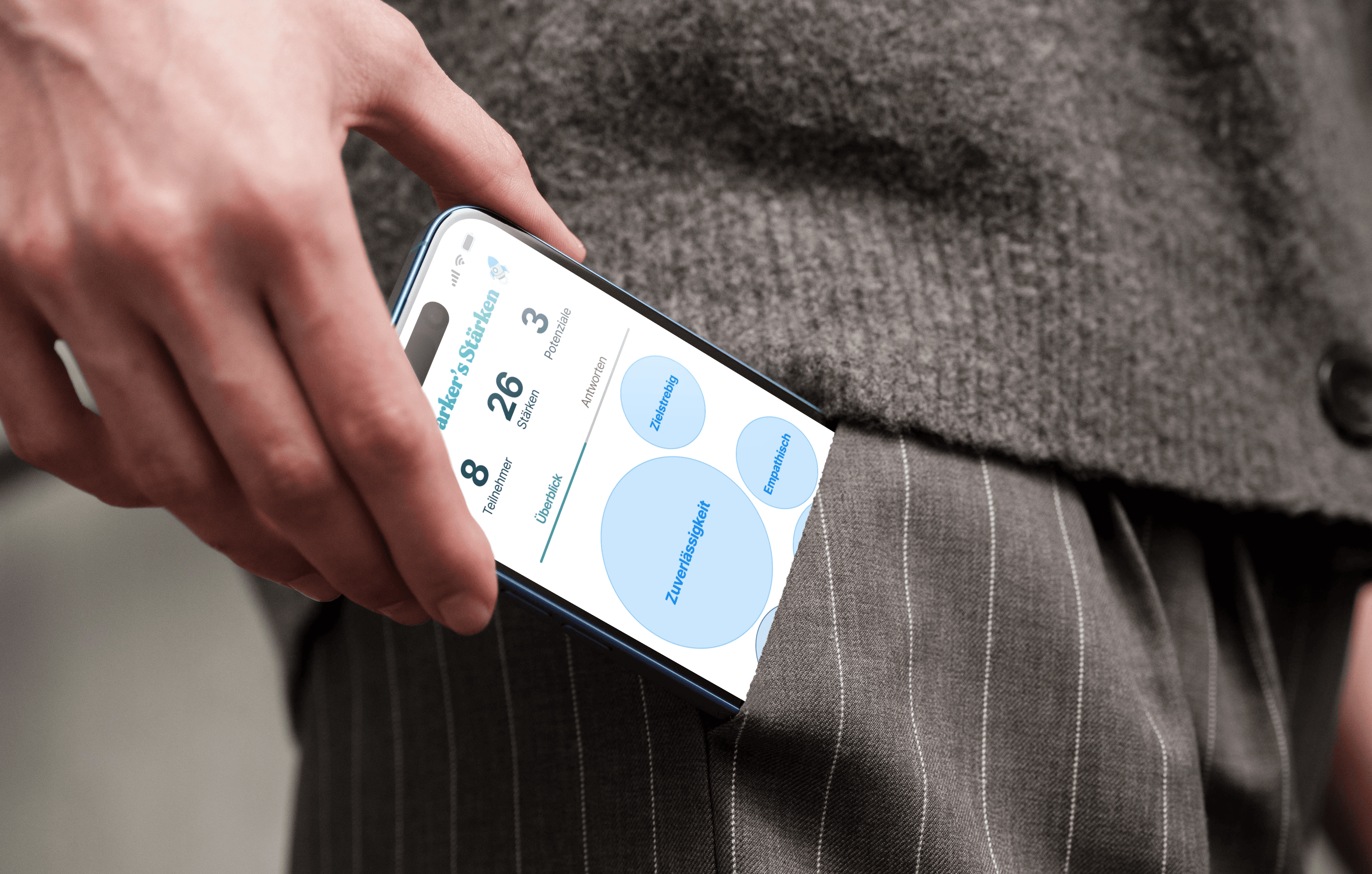
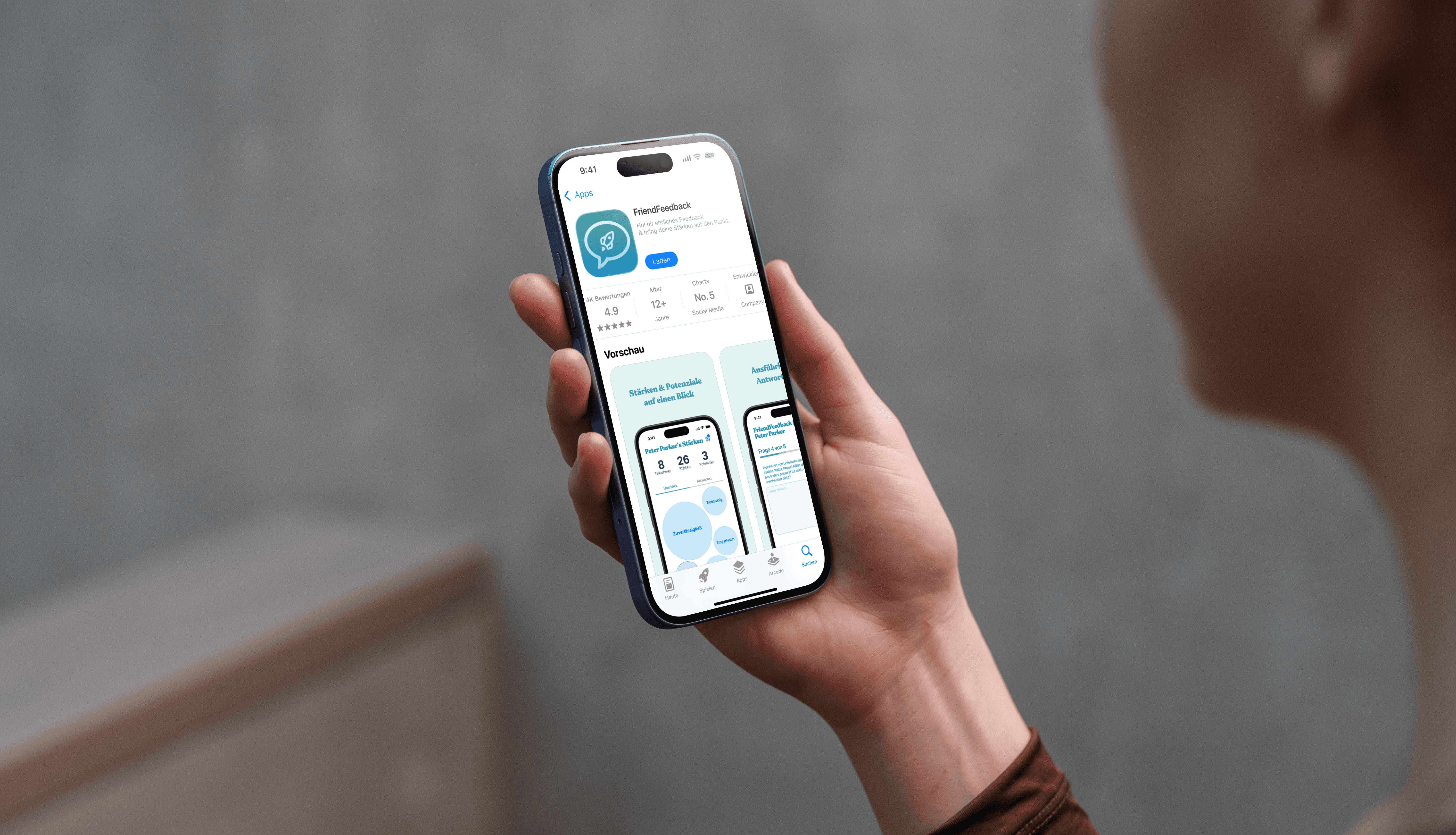
We turned the FriendFeedback concept into noz just one, but two prototypes: a clickable prototype of the service itself and an App‑Store page prototype. The service prototype focused on core flows like inviting friends, giving feedback, and reflecting on skills, whereas the App‑Store version simulated how the product would be positioned and discovered. The App‑Store format forced us to prioritize clarity: explaining the benefit in a few lines and choosing visuals that feel approachable instead of overwhelming.
Testing: Think‑Aloud Sessions
To see what actual users thought about the concept, we conducted Think‑aloud tests with both prototypes. Participants explored first the in‑service prototype and then the App‑Store page while verbalizing all thoughts. Moreover, we asked them what they understood, what confused them, and whether they would download or even use the service.
This gave us two important perspectives:
UX & User Flow: We could identify where users got stuck in the service and wich features where lacking.
Brand Perception: We saw how the product appears “from the outside” – whether app icon, screenshots, and App Store text set the right expectations or created misunderstandings.
Outcome & Learnings
Through Research, Prototyping and Testing, we moved from a problem space to a concrete, testable solution for it.
FriendFeedback is a valuable take at the common problems of students applying for their fist working student. job.
Key learnings for me as a designer:
User Interviews require a balance between openness and structure; a good guide and working in pairs are critical for quality data.
Cultural Probes are effortful, but they uncover deep emotional and behavioral insights that interviews alone can’t reach.
Insight Generation through clustering is where research becomes design: only when patterns are visible can we frame a strong HMW question.
Prototyping and Testing with simple artifacts (service flows + App Store page) are enough to spark honest reactions, surface UX pain points, and validate brand perception.
FriendFeedback is not just a course exercise; it’s a blueprint for how I approach service design today: research‑driven, iterative, and always grounded in real users’ needs and emotions.
Like my structured approach to service design? Let’s solve your next challenge!
UX Research, User Interviews, Ideation
Paul Dobrić